
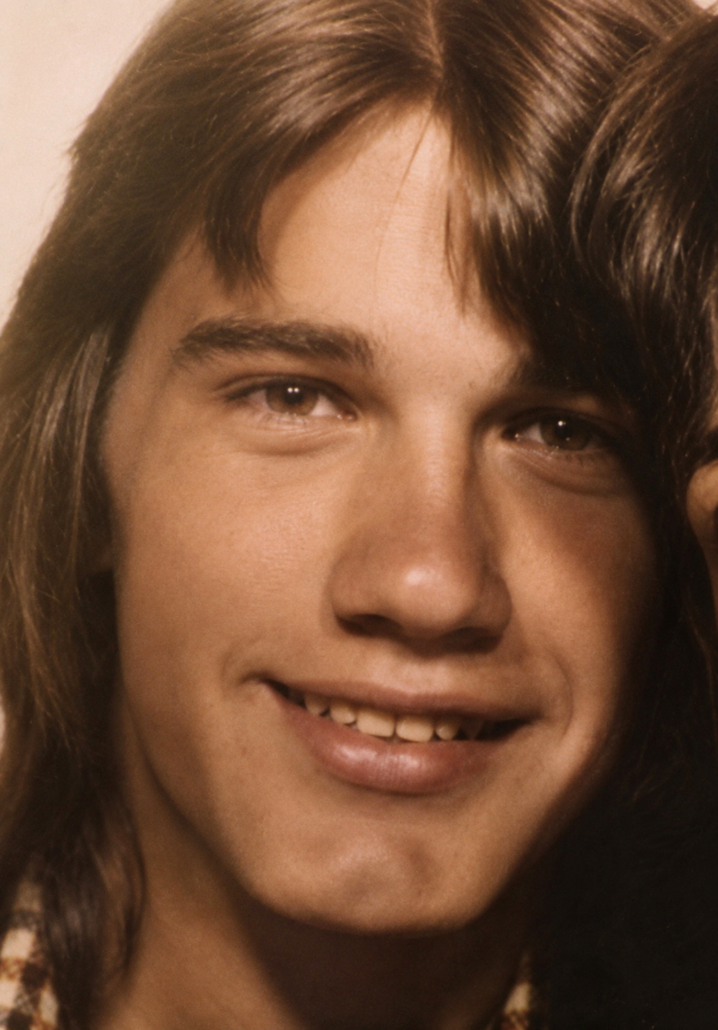
Growing up gay
I knew from an early age that I was attracted to other boys, I knew I was different and so I learned to cover it up. In Australia, in the world I lived with my parents, gay men or “poofs” as they called, were to be ridiculed and despised. Hating these “others” was generally accepted by everyone, men and women alike. It was a sport, like football, to ridicule anyone who looked remotely like a “queer”.
We wore uniforms in school, so in theory we all looked alike, but I would always be deathly afraid of looking effeminate in any way. I’d try to have my shirt untucked to make me a little disheveled or discourage my mother from shining my shoes each morning for me, which she was determined to do. I wondered if I was just too happy? Did I give off the signal of being “poofy” because I was eager to befriend others? Was I too enthusiastic about pop music? Did I watch the wrong TV shows? The hyper vigilance was exhausting.
I also lived under the constant scrutiny of my four older sisters and my brother. Being the youngest meant I was an easy target for criticism from my siblings. I made the decision to be quiet and stay out of the way of everyone at home. There was always so much going on with my siblings that I became the observer of what was happening, thinking it was safer to just not say anything. I thought that going to school would be a break from my bossy siblings and my parent’s strict rules, but it was in fact trading in one disciplinary code for another. I was always on the lookout for ways to make the experience at school more enjoyable, a way to compensate for the lack of fun from morning assembly until dismissal, which mostly involved the world inside my head. I could enjoy my ideas and the stories I created in my imagination while sitting at my desk appearing to be paying attention just like everyone else. I got to imagine a future world for myself, one where I would travel and meet fascinating characters who were like the ones I saw on television.
My retreat inwards and protecting my “secret” set me adrift from my parents and isolated me, increasing the shame I felt for creating the situation. Why did I have to be homosexual? I did my best to ignore it, struggled with it and showed interest in girls to see if I could somehow spark my latent heterosexuality. I just found myself more interested in boys and no matter how much I tried to be attentive and interested in girls I wasn’t feeling the attraction in the same way I had to boys. Boys just were more interesting and their physicality was mesmerizing. Even dressed in our bland ill-fitting uniform of sky-blue cotton shirt and grey trousers they were intensely attractive. Not all of the boys, but a few.
It seemed the more I fought the feelings, the less able I was to relax and be myself with my family. My self-consciousness grew and my fear of being exposed did too, so I developed a mask to wear in the world that would protect my secret. I know my parents just saw my retreat as ‘just growing up’, but in my isolation, I longed for their connection. I wanted to be able to share my burden with them and somehow have them take some of the pain away or help me carry the load. Or tell me that they loved me.
I knew my father loved me. He never said it until he’d had his first heart attack. I was living in Sydney by then and had flown home as soon as I got the phone call from my brother. He’d had bypass surgery and was lying in the hospital bed looking very frail. I was nervous about being so vulnerable around him, feeling overwhelmed by my fear of losing him and that I’d be too emotional when I saw him. To my surprise it was he who became emotional. The moment he saw me his eyes welled up with tears and he told me in a small broken voice that he loved me. Unprepared for this intimate disclosure I reached out and hugged him, too afraid to speak, too afraid to begin in that moment to cry a childhood’s worth of tears.
“Real men” didn’t hug their fathers or kiss them, they didn’t tell them they loved them and even as small boys we were told at around age 5 “you’re a man now and men shake hands”. Boom! No more affection.
Now that I’m a father I couldn’t bear the thought of my son not hugging me goodnight each night and telling me he loves me at bedtime. The spontaneity with which he makes these declarations is my greatest joy. It’s so immediate and true. And I feel the truth of it penetrate my soul. I meet his declarations with my own “I love you so much, now and always”.
I once told Dad I loved him. It was an accident and it just sort of slipped out of my mouth before I could catch it. He had given me a ride to the bus stop when I was running late to catch a bus and in that moment of being distracted, instead of my usual “goodbye” I blurted out “I love you”. I couldn’t believe I’d said it and leapt out of the car without looking back, fleeing the embarrassment. For days afterwards I hoped he’d forget it. I admonished myself, like you do when you’ve said something really inappropriate, except it wasn’t – I did love him. I just shouldn’t have said it out loud. There was an awkward moment and I believe we both hoped it had never happened.
But I knew he loved me, he never said it, but I felt it many times. The problem was that it was tangled up in his own struggles to make meaning of his life. He’d spent his youth enduring the brutality and senselessness of war, both in the Middle East and then in the jungles of New Guinea. He watched his friends being killed and maimed by the Japanese advances on the Kokoda Tail and it had deeply scarred him. Although he rarely discussed it with us, I knew he wrestled with the memories of those years and making sense of it all.
As soon as I had finished high school I left home, although I felt I’d left years before. I’d found gay friends outside of school and spent more of my time with them, ensuring my secret was safely hidden from anyone who knew me or my parents. It was common for most of my gay friends to be closeted from their families, so the world we shared together was exciting and filled with a passion for life. Being together we were free to be ourselves, an exotic caravan of misfits who reveled in our ‘otherness’ and embraced other outsiders. Our tribe had no judgement about how anyone chose to live, we’d endured the homophobia and harassment in our own lives so now we treasured the freedom to live openly and explore the parts of ourselves that were usually hidden away from others.
Leave a Reply
Want to join the discussion?Feel free to contribute!