
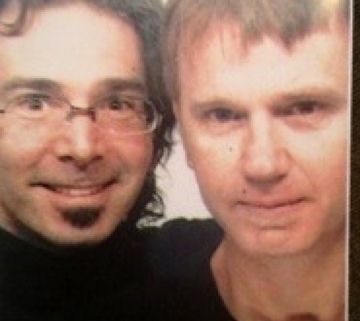
At first his silence was a given, after his long illness and subsequent death I was busy taking care of everything left undone by his failure to recover and return home. I’d launch into each day full of adrenaline and caffeine, armed with a list of chores to be achieved and completed in an attempt to restore some order to the chaos that life had become. If I worked diligently at these lists I felt that I was “getting on with things”, isn’t that what was expected now?
Daily people would ask how I was doing? Out of politeness I’m sure, but also to relieve the awkwardness of interacting with someone who’d been bereaved. I got it, it was harder for me to go out into the world and do my best to appear “recovered”. I did the best that I could do but inside I was empty, it was a feeling that was completely new to me, each encounter with the world outside felt like a performance. I watched myself behaving as normally as I could, using all of my social skills to get me through another day, but each day was endless moments of struggling to stay afloat. If I allowed myself to reflect, to look back and the “before” time it only brought pain and endless tears. When would this end? When would I recover? Would I ever recover?
As the weeks went by and my world gradually became more upright I began to question Clain. I had so many questions.
I wasn’t used to this silence from him as he was the talker in our relationship. He shared every thought with me, for better or for worse, but sharing is what he did. I typically spoke less but when it came to “us” I was happy to share my dreams and feelings with him. We knew what went on in each other’s minds and enjoyed the intimacy of sharing our realities. If you knew him, you’d know that this silence would seem unbelievable as he loved to talk and share every thought with me the moment it occurred to him. When we had first met, I found this unfiltered chattiness delightfully entertaining, because as Australians we just didn’t do that for fear of “oversharing” or being perceived as slightly unhinged or weird. His candidness was endearing and his essential goodness shone through his unedited dialogue. We’d initially met through a group of friends and couldn’t believe it when we discovered we lived one block away from each other.
I’d complemented his shirt and he told me it had belonged to a close friend, one of his many friends who’d died of AIDS.
“You’re in Chelsea?” he asked midway through telling me about Hoyt whose shirt he was now wearing.
“Yes, I’m on 14th Street between 8th and 9th. Where are you?”
“That’s so funny, I’m on 7th Avenue and 14th”.
“We’re neighbours” I laughed.
It was genuinely amusing to me that I could have walked past his building a hundred or more times as it was a little over a block away from me and on my short commute to work near Union Square. I loved how life kept delivering entertainment in the form of synchronicities and coincidences. When I thought of weekends when I’d walked past his building feeling in need of a friend for company yet never imagining I’d meet such a genuinely charming man right on my block.
His memorialising Hoyt by wearing his shirt wasn’t a one-off, there were others of his closest friends he’d lost to AIDS and by wearing items of their clothing it was his way of being close to them and gave me a clear view of the watery depths of his emotional makeup. A gay man of his generation, living in New York in the 80s meant being at the epi-centre of the pandemic. He told me stories of all the men who’d lost their lives in quick succession when the disease took hold and any treatment available was useless as the devastating plague swept through the community. As more and more of his friends were diagnosed, he committed to supporting them during their darkest time when their illness wreaked havoc on their bodies and forced them to remain housebound. He then volunteered as a Buddy to help support other people with HIV/AIDS at Gay Men’s Health Crisis. He spoke of the fear that took hold as the numbers continued to grow and when he was filled with dread at answering the phone only to hear of another hospitalisation or death.
When we began living together, which was officially marked by my giving up my apartment and moving into his, although there really never was a conscious decision to live with one another, we seemed to naturally just be together each evening and sleep at his or my apartment. His enthusiasm for daily life began very early in the morning when he’d be in the kitchen making coffee and singing show tunes to his adorable scruffy hound Willie, he’d invent new lyrics to personalise the song which was typically about his love and devotion to her. A Rodgers and Hart tune, Hammerstein or Gershwin.
My preference was for a quieter, less chatty start to my day, but I’d listen to his playful rituals as I showered and dressed for work and it charmed me nonetheless. When our son was born, he too was included in the Broadway jukebox, he’d be giggling at his Papa singing animatedly to him or Willie or our Siamese Genghis. This could perhaps explain Christopher’s early love of Ethel Merman’s rendition of “I Got the Sun in the Morning”.
He would often comment on my contentment with being silent, something he found very challenging. We were in the kitchen before dinner, he was cooking and I was busily cleaning up and setting the table when he casually said,
“You don’t know this but sometimes I play a game where I try to hold off talking so much so I think I won’t say anything to you until you speak first. Of course, I wait but then after a while you don’t say anything and I can’t stand it and so I just give in and have to say something.”
I stood looking at him for a moment with so many thoughts and questions about this but then in that moment we both just laughed long and hard. My funny valentine.
This was true, the part where I didn’t say anything, I’ve always enjoyed quiet. I think he often prompted me into speaking.
“I’ve realised that you aren’t even aware of your silence” he’d observed. “I don’t take it personally anymore because now I know that you just don’t notice you aren’t speaking.”
He was right of course, I didn’t notice. My mind was always busy with inner dialogue – talking to myself and making plans. I’ve always been a dreamer, a planner and loved the creativity of developing ideas in my mind. But I listened to him and immersed myself in the joys of his day he shared with me when we were together in the evening after work. Just before our son Chris was born, we bought a house; a warm, light-filled 1920s centre hall colonial in a postcard perfect town in New Jersey. I commuted to work in Manhattan by train and initially he worked from home so our end of day ritual would be me calling from Penn Station to let him know which train I’d be on and what time I expected to arrive home. Often his enthusiastic telephone patter would become a moment-by-moment replay of his day since I’d left that morning. Once Chris was born then it became overflowing with the sweet moments with our son, the conversations with his Pilates clients, nothing was omitted.
“I had better hang up or we’ll have nothing to talk about when I get home” I’d quip. I felt bad terminating the call. He’d laugh and reluctantly say goodbye.
“Alright alright…I know…but I’m just so excited to see you,” he’d sweetly say.
Now all of these years later after our move to Australia, which had been a long-time dream for him, he suddenly, very unexpectedly became ill. It was all so fast. A lingering cold became pneumonia. Medication was given to take home but our doctor expressing his concern by insisting that he return in two days to monitor his illness. Then on the return visit an ambulance was called to the surgery for him to be admitted to hospital.
“He’s very ill and will need to be sedated and intubated for his pneumonia for a few days”, the admitting doctor had told me. “It will give his lungs a chance to rest.”
Those few days turned into weeks and more tests and treatments to get a diagnosis. My routine now included a mid-afternoon visit to the ICU and hearing the update on his condition which continued to mystify the doctors. I’d sit by his bed and talk to him about my day and what our son was doing. I played his favourite music and reassured him that we would get through this together. I hadn’t heard from him for so long and told him so each time I’d visit.
But now there was a great silence and I longed to hear his voice.
I held his hand, “It’s lonely out here. I’m really scared and I need you” I told him as he lay in the bed surrounded by machines and drips. At times there’d be another piece of equipment attached to him, a dialysis machine at one point. I gave permission for biopsies to be performed and had “family meetings” with doctors to discuss his diagnosis and treatment plan.
“You need to speak to the doctor,” a nurse told me during one visit. It was five weeks into his stay and I’d been waiting for him to be taken off the sedation and extubated.
Finally, I would hear his voice again.
As the doctor walked me into the corridor outside the ICU room, he went over everything that had been done since they’d begun treatment, each step I knew so well and seemed hopeful. “We’ve done everything we can do at this point. There are no further options left.”
I was waiting for him to say something else and realised this was it. He had nothing further to add. I looked at him for a moment, after all we were in a hospital and this is where sick people go to get well again.
“So what are you saying?” I heard myself ask “Is he going to die?”
“Yes…quite possibly,” was his response.
The pattern of the tile floor of the corridor seemed to rise up under my feet and undulate, the squares of colour vibrating while my mind replayed what I’d just said.
As I made my way through the unit corridors and down onto the walkway across to the car park I kept hearing the doctor’s voice. “Yes …quite possibly.”
After all the family meetings and conversations with nurses and other doctors I felt there was hope and optimism. Now there was none.
I sat in my car for several minutes and asked myself if I could drive. I had to get home for Chris after school and to make our dinner. Just concentrate on driving, I told myself.
I did the best I could to not replay the words of the doctor.
Just before I was told he wasn’t going to recover, while I still felt there was a way forward and out of his comatose state, he came to see me in a dream. It wasn’t an ordinary dream, it was intensely vivid and had the kind of quality that made me feel that this was important. In the dream he was descending the stairs in our old home just as I had arrived home. I had walked through the front door and closing it heard a sound behind me so I turned around to see him. I couldn’t believe it.
“I’ve been so worried about you!” I told him angrily as tears began flooding my face.
“Look at me, I’m fine” he stood on the stairs looking vital and happy. He was naked and his body glowed radiantly.
I woke up sobbing from that dream as the phone alerted me to a call from a dear friend in America, a dear friend from the community where we’d met.
“He wouldn’t leave you without saying goodbye,” she said.
We’d had occasional conversations about end-of-life decisions, the kinds of discussions that men who’d lost friends as young men during the AIDS crisis have. We were realistic about life ending one day and the importance of knowing exactly what our wishes were.
Out of a clear New Jersey Autumn sky one day, or perhaps it was a grey Wintry sky? I’m not certain. But what I am certain about is that, as was typical of my husband, it came out of nowhere. this was another reason why I adored him…..but as I was driving, watching for oncoming traffic and making a left turn, out it came.
“You know, if I were to lose you… if you were to die…I’d be devastated. I would be so unhappy. But I know that in time I would like to think I’d recover and I’d move forward, perhaps I’d be able to eventually find another partner and find love again.”
So, as I was trying not to drive into the oncoming traffic, I took a deep breath and digested what he’d said.
“I know that. I really do. But nothing is going to happen so let’s not worry about that right now.”
“But it’s important for me that you know that, you know how much I love you and I’ve thought about what losing you would mean to me.”
“I love you too and I’d want you to find love again”, I reassured him.
Such was the dynamic of our relationship. His anxieties would arrive at any moment and he’d share them with me. I’d carefully hold his concerns in my loving care while offering my reassurances and calm. I knew that when his anxieties became unmanageable, he shared them and together we’d discuss them.
In the many months since his death, I’ve replayed that conversation over and over. It is comforting sometimes, not always, but sometimes, to know now that he was telling me to do the same. To get on with life. To go out and find love again, if I could.
As I crawled, limped and staggered through the endless days that followed losing him, I would remember those words and I would tell him that I was going to do what he wished.
Time has passed since he left us and I no longer stagger or stumble, but I feel I walk in a new way, mindfully putting one foot in front of the other, I move forward with purpose.